
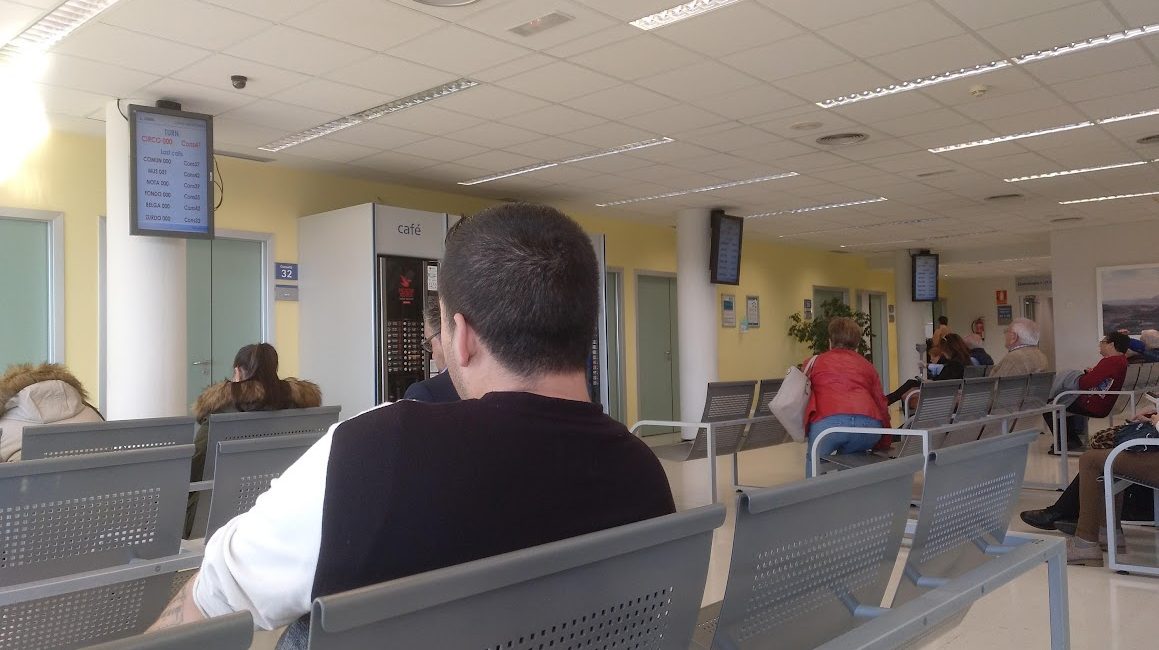
The Ministry of Health says that the doctors’ strike that is happening all over Spain has caused the cancellation of 8,000 appointments, 6,000 tests, and 206 surgeries in the Valencian Community. The CESM CV Medical Union says that 90% of doctors in hospitals and 70% of doctors in health centres are supporting the strike.
Since the first of the four days of strikes, appointments that were supposed to happen this week have been cancelled because it has been impossible to take care of them all with the minimum services, which are set at 50% in most units. The only exceptions are hospital emergency departments and the SAMU (Emergency Medical Service), which are open at 100%. The Medical Union and the Primary Care Physicians Forum of the Valencian Community have called these minimum services “abusive.” The Medical Union has even asked the court to take steps to lower the number of doctors who need to be on duty.

The Medical Union says that five operating rooms at the Elche General Hospital have been closed, and that there has been full surveillance in specialities like Radiology, Urology, Pathology, and Emergency at the Doctor Balmis Hospital in Alicante.
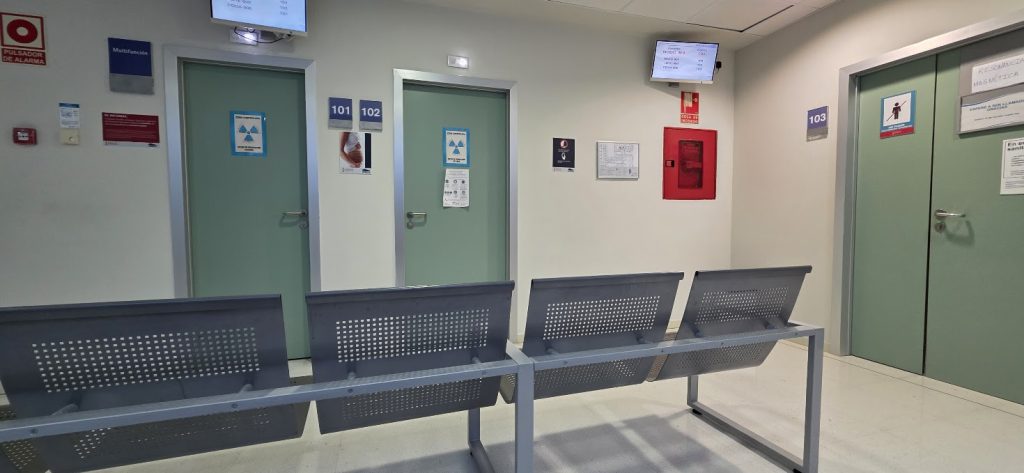
The lack of doctors has been perceived differently in different health centres and communities throughout the province. In some places, like San Blas and Campoamor in Alicante, waiting rooms have been noticeably busier in the morning. In other places, like La Florida, there have been almost no lines in the middle of the day. There was a lot of sickness going around, and there had been several days of work stoppages in June and October before the strike.
So, on the first day, María José Gimeno, the deputy general secretary of the CESM CV Medical Union, talked about how many people were taking part in the protest for better working conditions for healthcare workers. In fact, all the doctors at some hospitals, like the one in Elche, went on strike. She said, “Those who don’t have to work minimum services are on strike.” María Pilar Valero, the provincial secretary of the CESMCV Medical Union in Valencia, also talked about the high turnout and criticised the high minimum staffing levels. She said, “Doctors are saying enough is enough and we need to change our working conditions to have the public healthcare system that citizens deserve.”
The regional minister tells the national minister to think about it
Marciano Gómez, the Minister of Health, said that “in the central government, and especially in the Ministry of Health, there is a lot of improvisation and a lack of dialogue, which has led to the biggest conflict in Spanish healthcare in a long time, all because they didn’t negotiate the Framework Statute for healthcare professionals.”
He has asked Minister Mónica García to think about it, take back the proposal, and start talks with everyone so that the new rule “is the result of consensus” among professional groups, scientific societies, unions, autonomous communities, and the central government.
Gómez said that the current Framework Statute has to be changed and “adapted to the current needs of both society and professionals.” He also asked that this be done “with consensus and with a technical, legal, and economic analysis so that it is reflected in the General State Budget and does not become a dead letter or, as we suspect, a ‘I’ll invite you, but the autonomous communities will pay’ situation.”
The head of the regional Popular Party has said that the ministry is being “irresponsible” with a reform that doesn’t fix the real problems with the healthcare system because it doesn’t address the need for stable funding for the National Health System, the lack of staff, or better working conditions.
Lastly, he asked the minister to “be responsible and have a vision,” because the Health system doesn’t require stress or false hopes; it needs leadership, devotion to institutions, agreement, and cooperation to make the National Health System stronger.
What are the doctors protesting about?
The Spanish Confederation of Medical Unions (CESM) called the protest to highlight that the profession does not support the draft Framework Statute that the Ministry of Health wants to approve. This is because the group’s demands have not been met in recent months.
The group insists on getting its own negotiating framework and rules that let the professionals directly negotiate their working conditions and that take into account their unique training and duties. They also want a fair professional classification with fair pay, retirement rules that let them retire early, voluntarily, or partially without losing money, a maximum 35-hour workweek where any extra hours are voluntary, agreed upon, and paid for, and strong guarantees of rest and work-life balance that don’t depend on the “needs of the service.”
The Valencian Community’s Primary Care Physicians Forum (FOMAP-CV) has publicly backed the strike. This group isn’t simply talking about “working conditions” (though that is a part of it); they’re talking about the healthcare paradigm itself. They say that primary care needs a plan that lets for good scheduling, reasonable patient loads, and short wait times. This will put an end to the “endless schedules” that keep doctors from spending more time with the patients who need it most and limit important clinical activities like minor surgery, ultrasound, community outreach, and so on. They say that the medical field is in “a critical situation” because there aren’t enough physicians, there are too many patients, the waiting lists are too long, and there isn’t enough money being spent.
In response to the “blockage” of the 35-hour workweek and other improvements, the unions Satse, CC OO, UGT, CSIF, and Intersindical Salut-IV have announced a new schedule of protests. The first protest will be on December 16 in front of the Ministry of Health. The Medical Union has also said that there will be protests every other week.
Minimum services
The minimum hours of service in hospitals will be half of the normal working hours for inpatient wards, the hospital pharmacy, the home hospitalisation unit, outpatient clinics, speciality centres and the blood transfusion centre. Dialysis, radiotherapy, ICU and resuscitation units, the transplant programme, the day hospital, priority 1 scheduled operating rooms, and oncology will all run on their normal schedules. Central Urgent Services, the emergency operating room, and hospital emergency services will all run on a Sunday schedule.
The Continuous Care Points (PAC) and Health Care Points (PAS), which are the Primary Care emergency services that operate when the health centres close, will work like a typical day.
In particular, health centres and extra clinics would only be open half of their normal hours. CICU-SAMU will run on a regular schedule, and Central Services, labs, and diagnostic imaging services will all be at 50% capacity.

Author: Derek Appleton

Other Articles

Benidorm opens the doors of the ‘BeCiti’ hub
Judge dismisses the case of the Russian pilot murdered in Villajoyosa


No Comment! Be the first one.