
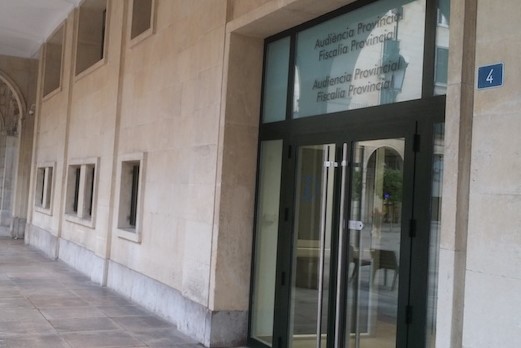
Two housekeeping staff members at a health centre in Benidorm were found guilty of a hate crime by the Alicante Provincial Court for making fun of a coworker with achondroplasia. The decision says that for almost two years, the victim was made fun of and humiliated practically every day, with the staff calling her “the dwarf.”
The decision, which is not final and can be appealed to the High Court of Justice (TSJ), gives each of the two offenders a six-month prison sentence and tells them to pay the victim €6,000 in moral damages. The verdict also included a restraining order that bans the defendants from getting close to the victim for three years and six months. A third cleaning worker was also tried and found not guilty since there was no proof that she was involved in the incidents. She was there when the pranks were supposed to have happened, just like other staff at the centre, but it wasn’t clear how she was involved.

The defendants said that these were just jokes between coworkers. The court says that even if these events might seem like “tasteless jokes” between coworkers when looked at in isolation, “that impression cannot be sustained due to the anonymous nature of some of the incidents and their repeated occurrence over time.” The court says that “anyone who is a victim of this situation feels like they are being watched, harassed, and persecuted, with the fear that comes with it, and that cruel references to their disability come up all the time, even when they are mixed in with other work-related matters.”
Where the fight started
The fight started over work-related problems with cleaning a container, but this was just the beginning of a series of humiliating acts against her because she has a disability that they make fun of with degrading words and actions, both individually and as a group, feeding off each other.
The first incidence happened on December 17th, 2020. One of the defendants called the victim from a blocked number and said they were from the Dwarf Circus and wanted to hire him as a trapeze artist. A few days later, he got another call, this time from someone using a hoax phone app who said they were from an insurance firm and told him his car had been speeding. The court says that even though this call didn’t reference the victim’s condition, its anonymity, along with the other events, establishes a pattern of harassment.
The third call was from a friend of the accused who had seen her at the grocery store when she was at work. He informed her, “I just took your picture and I’m going to send it to your manager.” He also said that both she and her husband were “hybrids” and made jokes when the connection failed, stating, “I can hear you like you do, it’s choppy.” The court says that even if a third person made these words, they “denote the humiliating atmosphere the accused created.” In this regard, they stress that the victim saw what started out as a fortuitous meeting as an act of surveillance by an unknown person. The victim said in court that she felt threatened, harassed, and terrified.
After the phone conversations, the defendants called the victim “the dwarf” and made fun of her disabilities at work in other occurrences. These humiliations caused the victim to have mental health problems, including an anxiety-depressive illness.
The ruling contains a declaration from the victim herself during the trial, in which she said that she was always being made fun of: “I was a circus to them.” The court says that even though the defendants tried to downplay their acts or make excuses, these words show that they are guilty and meant to do what they did. The sentence makes it clear that the words used are hurtful, no matter how often they are used in specific situations, even as a joke and without any negative intent; objectively, they imply contempt.
The Court says about the hate crime that “criminal law cannot require people to treat each other with exquisite courtesy, nor can it ignore that social and cultural reality is very diverse and varied according to socio-educational environments, but there are minimum standards of respect for human dignity and consideration for all people, it being obvious that a physical disability usually implies difficulties for those who suffer from it that cannot also be the object of mockery, humiliation and discrimination.”

Author: Derek Appleton

Other Articles

No boarding pass, no entry




No Comment! Be the first one.