
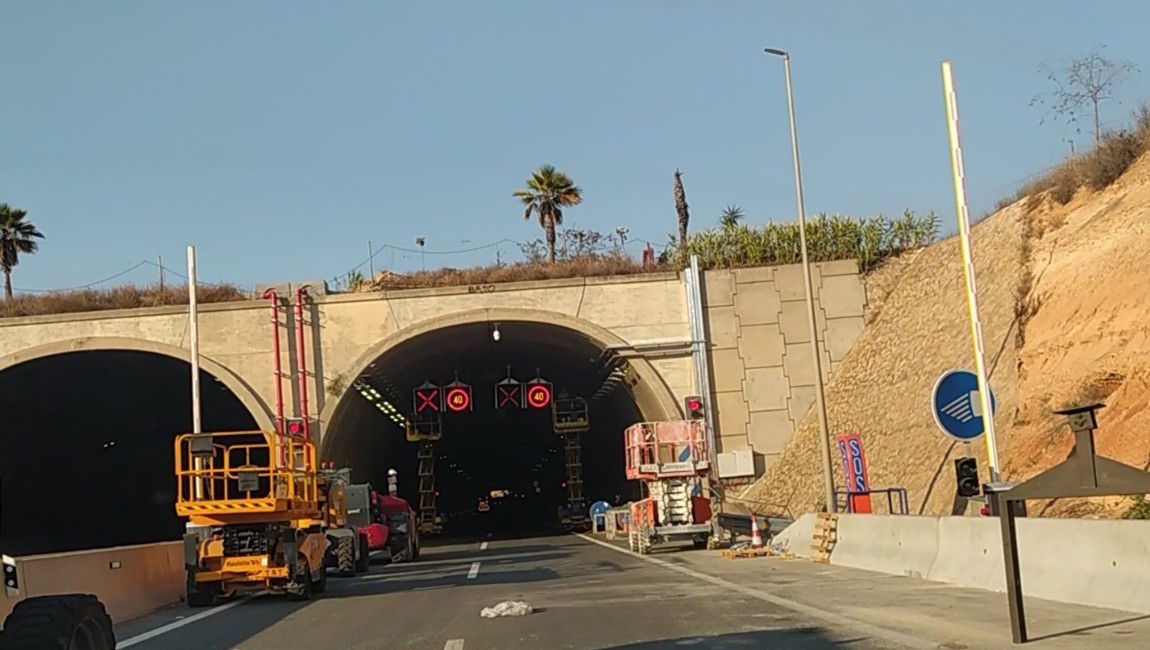
The Ministry of Transport and Sustainable Mobility has finished making the Pilar de la Horadada tunnel, which is on the Crevillente–Cartagena section of the AP-7 motorway in the province of Alicante, more modern and energy-efficient. They did this by putting in an intelligent LED lighting management system. The European Union’s Recovery, Transformation, and Resilience Facility gave €3.5 million (including VAT) to pay for this initiative.
Juan Antonio Nieves, the Deputy Government Delegate in Alicante, said that “this action is a clear example of how European funds from the Recovery, Transformation and Resilience Plan translate into real improvements for citizens, reinforcing road safety and committing to more sustainable and efficient infrastructure in the province of Alicante.”

The tunnel has been open since 2001 and is 794 metres long. It is in the space between the town centre of Pilar de la Horadada and the Torre de la Horadada expansion area. About 28,000 vehicles use it every day.
Nieves said, “The modernisation of this tunnel not only makes it safer for the thousands of drivers who use it every day, but it also helps lower the energy use and emissions that come with its operation.”
The efforts taken have made the tunnel safer for users by giving it the right facilities and equipment. They have also cut down on energy use by making the facilities more efficient through smart control of LED lighting.
The modernisation of the tunnel facilities has included the power supply, an intelligent system for the regulation and control of lighting, evacuation signage, the public address system, the closed-circuit TV with a new Automatic Incident Detection (AID) system, the fibre optic communications cable, the speed limit control panels, the closing barriers at the tunnel mouths and the hydrant network, among other actions.
There are also two separate pressurised vestibules, one in each of the two existing emergency galleries in the tunnel, as well as two underground tanks with a total volume of 60 m³ for fire protection.
The new facilities will go through the integration, testing, and verification phase until January 31, 2026, when the work is done.
Juan Antonio Nieves said, “Adding LED technology and smart control systems makes this infrastructure meet the highest European standards, which shows the Government’s commitment to safe and sustainable mobility.”

Author: Derek Appleton

Other Articles




No Comment! Be the first one.