
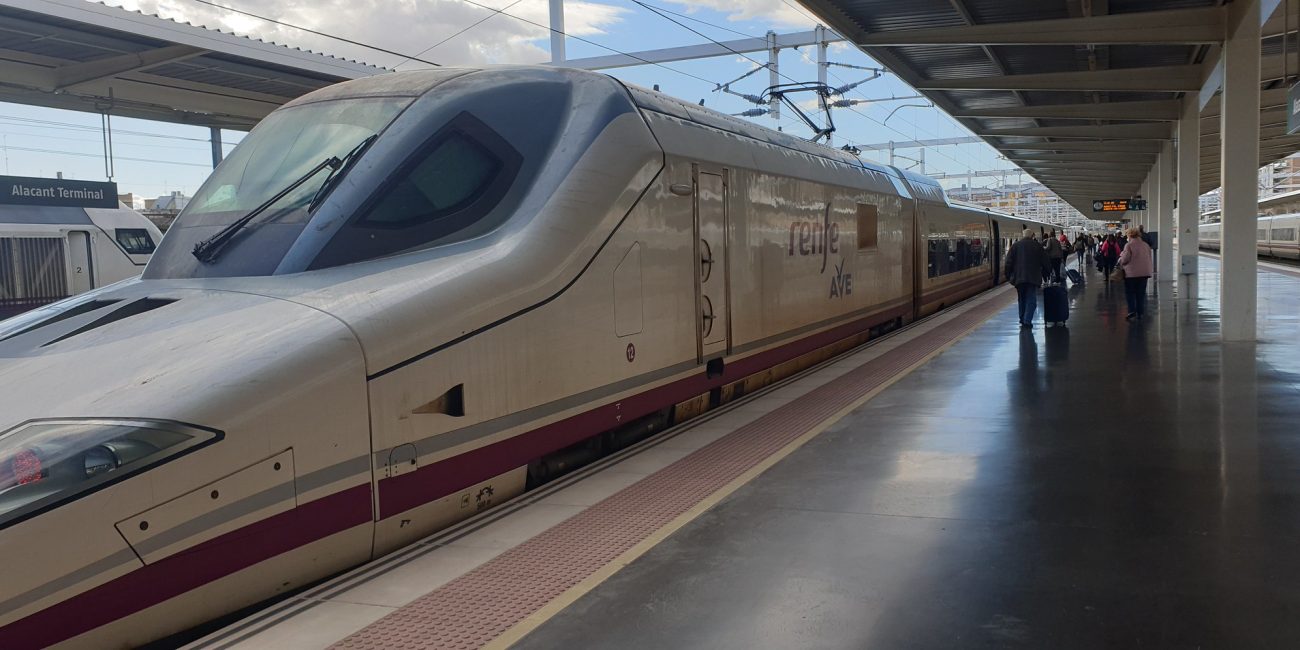
In the instance of Alicante, the cancellations primarily affect high-speed services, such as AVE trains to Madrid and other long-distance destinations.
The railway unions’ strike has placed Spanish travellers, particularly train users in Alicante, in suspense. According to union sources and the railway company itself, 14 high-speed trains due to depart or arrive in Alicante yesterday, Monday, February 9th, were cancelled due to the work stoppage.

The strike, scheduled for February 9th, 10th, and 11th, has been called by the sector’s main unions, including SEMAF, CCOO, and UGT, in protest of railway safety, a demand that stems from a series of incidents, most notably the fatal accidents in Adamuz (Cordoba) and Gelida (Barcelona), which killed dozens of people, including train drivers.
Impact on Alicante and the high-speed network
In Alicante, the cancellations primarily affect high-speed rail services, such as AVE trains to Madrid and other long-distance destinations. Some routes have been completely halted, while others operate on modified schedules or are partially substituted by reduced services. If unions and authorities cannot reach a deal, the number of cancellations may climb during the day.
Renfe and even private operators such as Iryo and Ouigo have reported the cancellation of several dozen high-speed trains across the country during the three-day strike, adding to the disruption of medium-distance and commuter trains.
Minimum services to ensure mobility
The Ministry of Transport and Sustainable Movement has defined mandatory minimum services to ensure, to the greatest extent feasible, traveller movement during the 24-hour period of the strike.
Commuter rail: 75% of trains during peak hours, 50% throughout the day.
73% of planned services are high speed or long distance.
Medium Distance: 65% of the regular service.
Commuter train in Catalonia (regional management): 66% during peak hours and 33% otherwise.
Goods have a minimum service of 21%.
These percentages are in response to a resolution issued by the State Secretariat for Transport and are designed to provide a basic level of operation, albeit with significantly reduced frequencies.
The union’s demands and the circumstances of the strike
The unions have justified the strike by blaming a lack of progress on safety, infrastructure upkeep, and employing additional employees, all of which they allege have not received a sufficient answer from the government despite multiple rounds of negotiations.
The demonstration comes amid rising concern over train safety in Spain, following numerous high-profile accidents in recent weeks that have fuelled public debate about the status of the system and the need for immediate investment.
recommendations for travellers
Renfe reminds consumers that any ticket affected by cancellations can be amended or reimbursed free of charge, and recommends them to check the service status on its website or mobile app before travelling.
Travellers with tickets to or from Alicante during the three-day strike may expect disruptions, time modifications, and, in certain cases, bus replacement.

Author: Derek Appleton

Other Articles

Man electrocuted while working in Denia
Alicante airport opens the first ‘Wetherspoon’ in Spain



No Comment! Be the first one.