
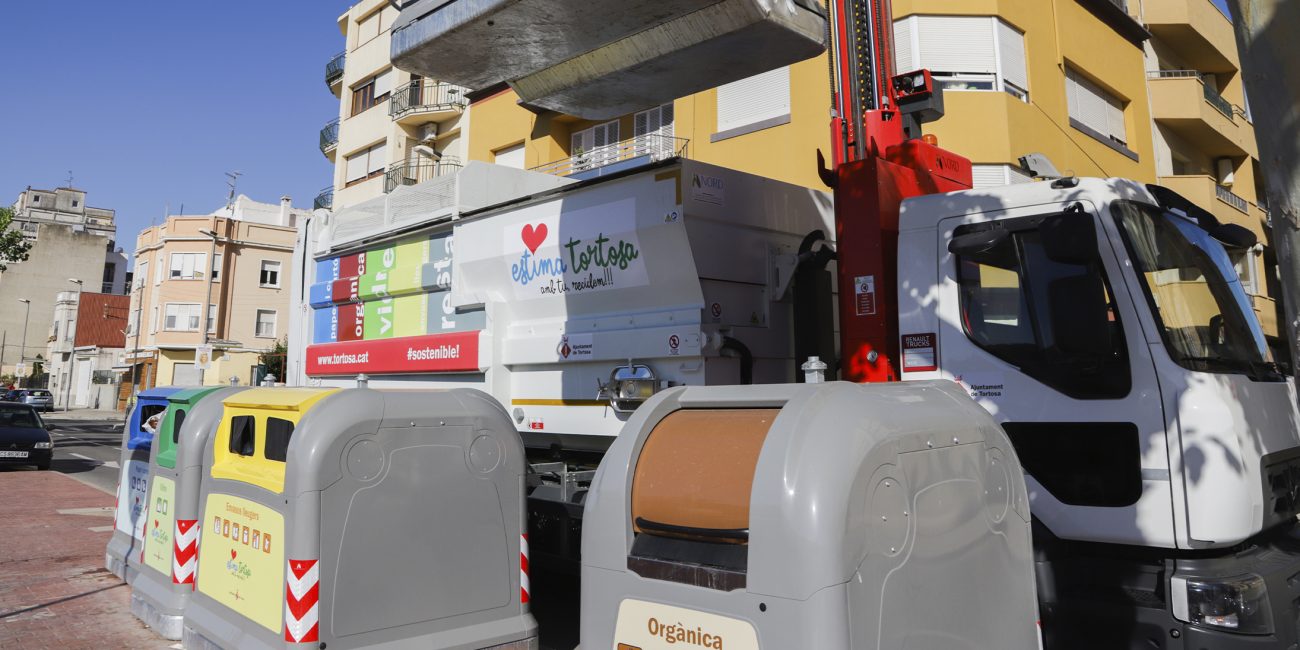
According to Councillor for Street Cleaning María José Ruiz, Acciona, the company hired to provide waste collection and street cleaning services in Torrevieja, intends to start deploying about 900 organic waste containers between the end of January and the beginning of February. At the moment, there is no option for recycling and all organic waste is disposed of in the grey “general waste” receptacle. The city produces 53,000 tonnes of rubbish a year, which accounts for more than 25% of the total waste produced by the 27 municipalities in the area.
The multi-million euro contract, which went into force at the end of July 2022 and for which the multinational earns €25 million a year from municipal coffers, included the commissioning of this container as one of its top priorities. Despite the fact that the separate collection of organic garbage has been a legal requirement since December 31st, 2023, they will appear on the streets three and a half years late, and this shortcoming has not been included among the various violation of contract lawsuits that Acciona has accumulated. In actuality, Torrevieja started the process of creating a new contract with requirements that were modified to reflect this legal change. These specifications included 1,132 containers for the collection of organic waste.

The Vega Baja Sostenible Consortium, which is composed of the 27 municipalities in the region, the Generalitat, and the Diputación and is in charge of managing and disposing of regional waste, flatly denied the company’s initial claim that the Dolores waste transfer plant did not accept the organic fraction.
The current container islands will be the site of the rollout. Containers will be added to the existing locations, and some containers for mixed garbage may be kept or removed based on waste disposal statistics. According to Ruiz, the containers will be outfitted with individual waste collection tracking equipment, which is not yet scheduled for installation in Torrevieja but in other municipalities enables households to get incentives for recycling.
The amount of waste sent to landfills is decreased by at least 40% when organic waste is collected separately. This waste is mostly organic household waste, such as food scraps, including vegetables, meat, fish, eggshells, coffee grounds, tea bags, dirty napkins, minor pruning waste, and natural cork. However, in order for this to work, the trash must be organic and properly collected because the treatment facilities are built to turn the waste into compost.
Recovery of the waste fraction becomes more difficult if a sizable portion of it is composed of non-organic elements. Furthermore, there is presently no guarantee that recycling at the province of Alicante’s landfills will be 100% successful from a technical aspect.
If citizens are aware of and follow source separation, which is done in households if a “brown” bin is provided, it would already result in a decrease in tonnes of garbage because it permits longer disposal times. When cardboard, plastic, and cans are also separated at the source, the same thing already occurs, although many places in Torrevieja still don’t have all types of bins.
Consumption
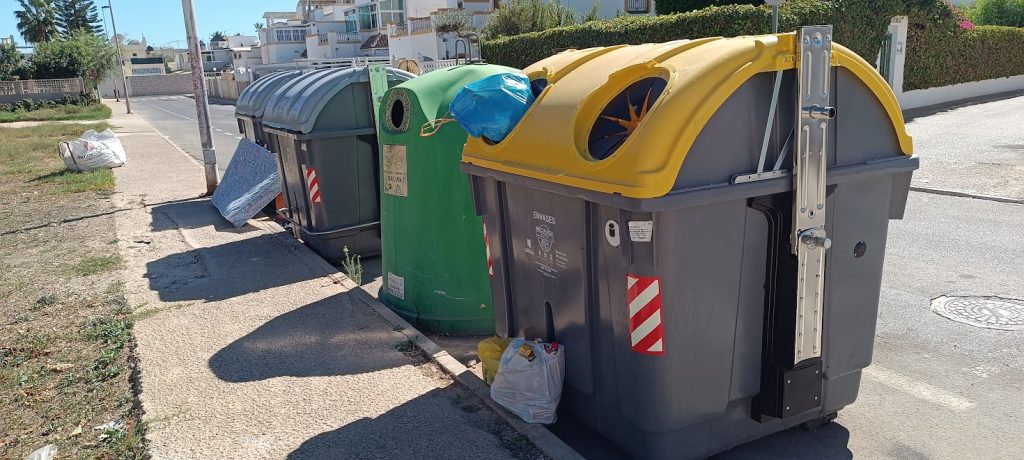
As a condition of the residential project’s approval, the developer of the La Hoya mega-development has provided the sole organic waste collection units in Torrevieja thus far. These units, however, are presently kept in a municipal warehouse and have not yet been deployed. Additionally, public schools that recycle organic waste from their cafeterias have been the target of awareness efforts by the City Council. Some hospitality establishments have also adopted this, but to a lesser degree. European funds are used to support the hospitality and school cafeteria initiatives.
Rejecting the rise
However, citing the necessity to enhance the municipal contribution, the municipal technical services have rejected the company’s request for a thorough contract revision to increase the amount. Two years after the contract started, the request was made just as the business was legally permitted to register it. Because the containers’ overall capacity exceeds what was originally stated in the tender documents, the increase was justified. The technical team, however, rejected the request, stating that there was no data to support this increase.

There is still no daily rubbish pickup in La Hoya.
Councilwoman Ruiz also discussed the problem of uncollected rubbish in the La Hoya residential area. There is no daily service for the first 100 inhabited residences in this development. Residents claim that while the containers themselves are not being emptied, overflowing trash is being picked up from them. The contract specifications include the progressive implementation of waste collection and street cleaning services for the first phase of the development, which has already been formally turned over; nevertheless, a formal revision that has been accepted by the firm is needed.
The governing board must authorise the process, which is currently in the municipal legal department. The first tourist apartments, which have been advertised for more than €350,000 and boast a view of Torrevieja’s pink lagoon, are blatantly unserviced. Over the following ten years, this development is expected to build up to 7,400 dwellings.

Author: Derek Appleton





No Comment! Be the first one.