
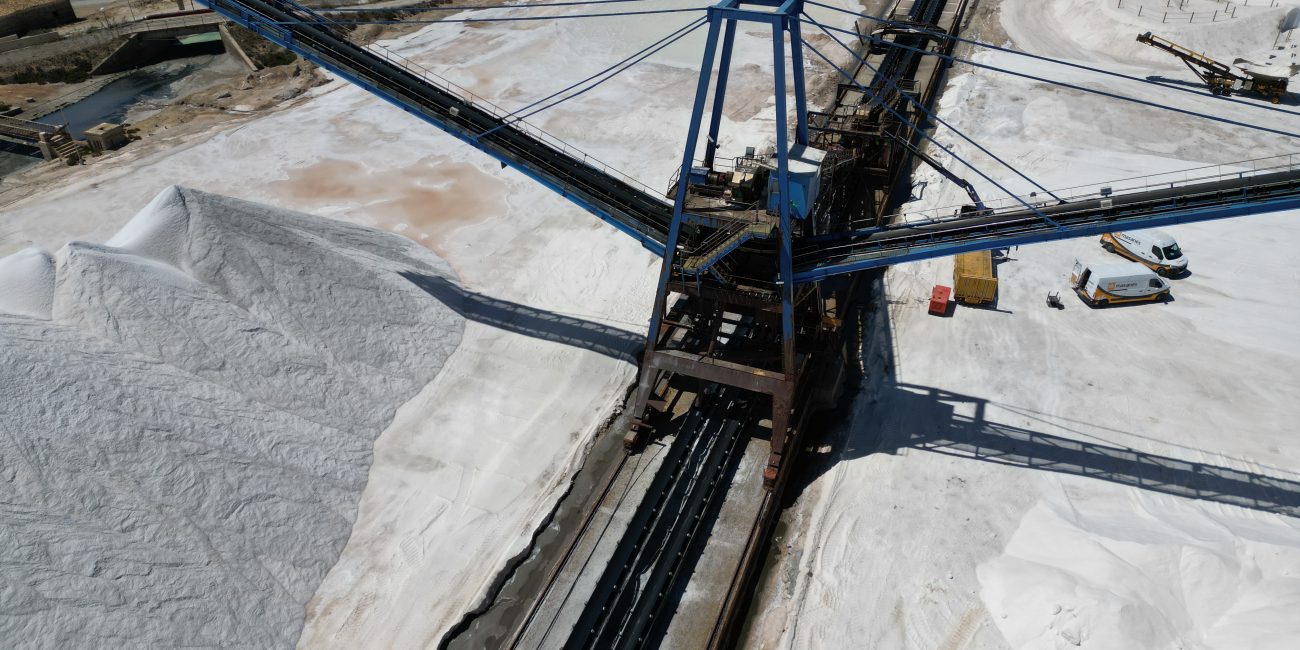
All year round, there is a very steady need for salt. The urgent restocking of salt stocks for de-icing roads and highways following one or more snowstorms is the only thing that can significantly change it. This is the situation that has occurred throughout Europe at the beginning of the year. Up until a few days ago, 85% of the continental surface was covered by snow, with 95% of that area being in Germany, the Netherlands, and Belgium, and a smaller portion in the UK and France. Because of the low temperatures, it persists in many places. The saltworks in Torrevieja are among the most equipped in Europe to react quickly to this spike in demand.
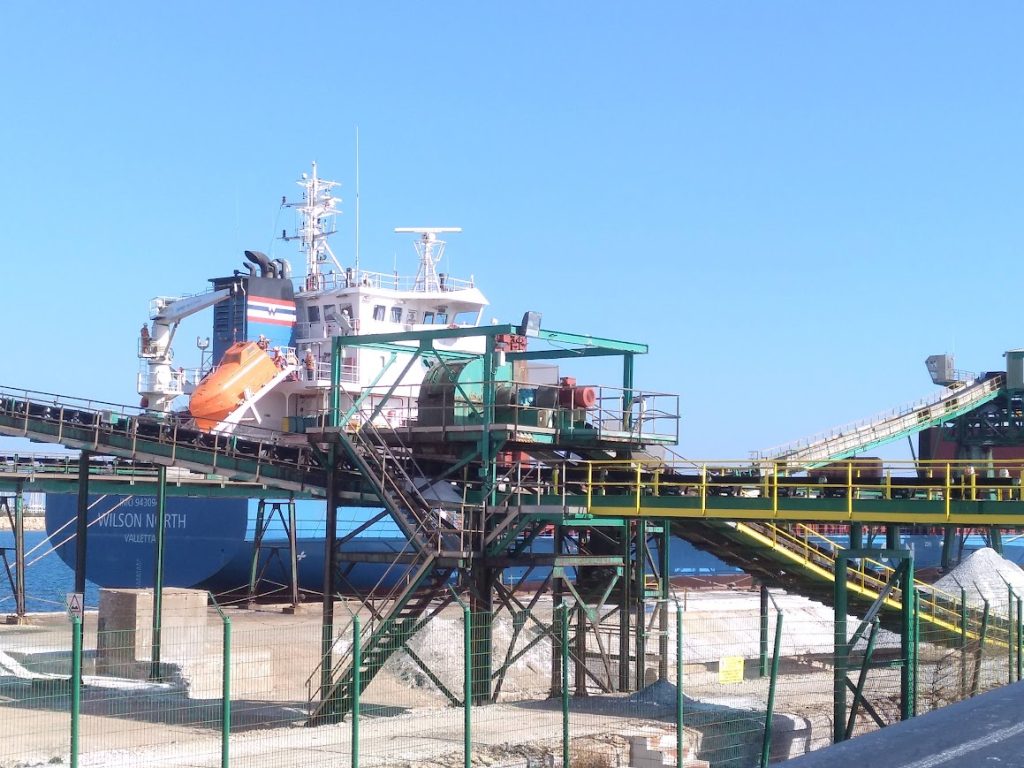
Over 400,000 tonnes of sea salt are being stored there, creating a half-kilometre-long wall of salt mounds that can be seen from several locations in Salinas Field. Additionally, it has instant access to the sea from Torrevieja’s Poniente terminal, which enables the bulk loading of thousands of tonnes in a single day. Additionally, it makes use of a special year-round extraction technique.

These days, this scenario is developing, which calls for an immediate reaction. And in response to this upsurge in a fiercely competitive market, the French Salins group’s New Saltworks Leasing Company (NCAST) is offering a product with a high supply and minimal added value.
The Torrevieja saltworks’ managing engineer, Jose Perez, acknowledges that the increased demand “has been moving” and will be reflected in the more than 60,000 tonnes that will be sent by sea this January, primarily to the Nordic nations.
Three shifts have been planned by the company to load salt aboard cargo ships that are anticipated to dock in Torrevieja Bay the following week. A 14,000-tonne freighter is one of them. Less than 100 cargo ships visit Torrevieja annually to transport salt, yet they seldom fill half of that capacity.
Home market
The national market is also being impacted by a chilly winter. For the purpose of de-icing, several municipal and regional governments are accumulating salt in large quantities. More salt has been requested to prevent shortages during the hardest period of winter, even if the snowstorm during Christmas, New Year’s, and Three Kings’ Day wasn’t as bad as expected at lower elevations.
With an average load capacity of 20 tonnes, 15 to 20 trucks per day have been using the primary loading access to the salt flats since December. There are hundreds of uses for salt, and trucks still come with bagged salt for food and other purposes. For instance, a trailer was being loaded on Friday for the Serrano ham manufacturing sector, where salt is a necessary component.
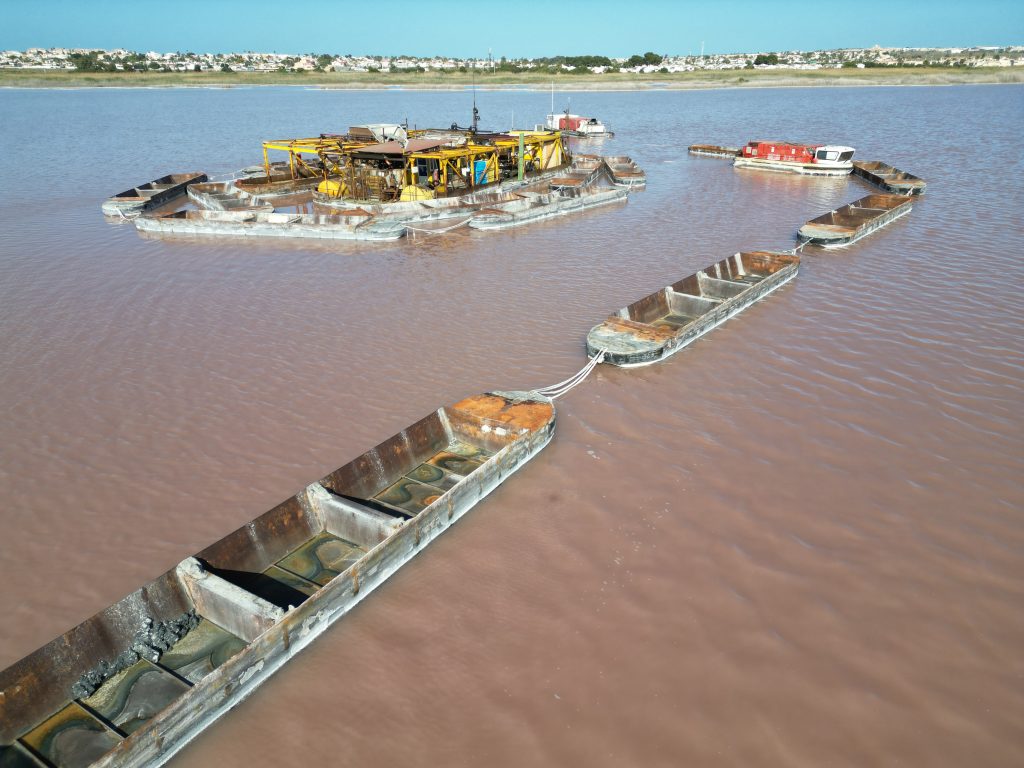
The enterprise has recovered its typical activity level of about 500,000 to 550,000 tonnes extracted annually after the period from 2016 to 2021, when the salt flats saw multiple inconsistent production years due to severe rainfall. The harvester, referred to as “the machine” or “the turner” by the salt workers, keeps removing a significant layer of crystallised salt from the bottom even in the dead of winter.
Pérez notes that output has not been impacted in the least by the abundant rainfall that was observed throughout December. Torrential rains are particularly harmful because they carry silt and can lower the lagoon’s salt saturation due to their volume. This hasn’t happened.
He really notes that the Torrevieja lagoon’s brine saturation is still quite high for the season, as seen by the fact that, even in mid-January, “the pool” still has a lot of its pinkish colour, which is more reminiscent of spring and summer.
Travel
In addition to providing gastronomic experiences, the salt flats, which compete with a variety of salt production facilities in a globalised world, have expanded their operations by opening to tourism in 2018. This has resulted in an annual influx of about 40,000 visitors who come by bicycle, foot, and tourist train. The best sea salt, fleur de sel, which is harvested using a non-industrial method, is the main attraction at their gift shop.
With its salt mountain scenery and the already well-known pink lagoon, the lagoon is also accessible to producers of audiovisual content, particularly those in the advertising industry. The unanticipated emergence of a sizable breeding colony of thousands of flamingos in the centre of the pink lagoon since 2020 has further enhanced this tourist destination.
Given the significant concerns of the state and regional administrations regarding the effects of this activity on the environment, which is a natural park, the municipal project, which would have involved the saltworks, to establish a thalassotherapy offer in the vicinity of the chemical industry has in fact stalled.
Salt sales continue to account for the majority of its recent revenue, which has been around ten million euros a year. Compared to the thousands of salt workers it employed 70 years ago, the industrial complex can now run at full capacity with just 80 salt workers thanks to a technological modernisation process that started in the 1950s, when the saltworks was a state-owned corporation.

Author: Derek Appleton

Other Articles





No Comment! Be the first one.