
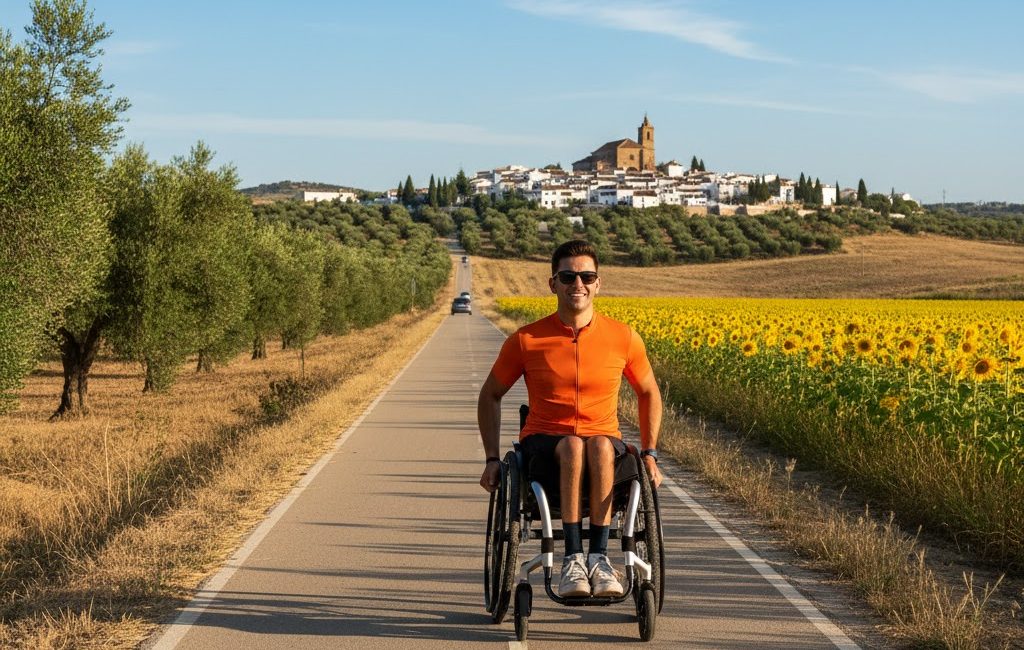
The Malaga City Council has taken a big step towards making the city more welcoming and accessible. The Mobility Department has said that those with limited mobility who use wheelchairs, whether they are manual or electric, will be entitled to use the city’s bike lanes.
This action comes in response to a request by the Málaga Accessible Development Group, which is made up of 83 groups, including the City Council itself. Málaga’s decision to allow this kind of mobility in its municipal infrastructure puts it in line with other Spanish cities, such as Vitoria and Murcia, that already do.

Users living together
Article 39.3 of the Malaga Sustainable Mobility Ordinance is the most important part of the new rules. It talks about how bike lanes can be used and how different types of users can get along in these places. The directive says that “pedestrians using skateboards, roller skates, and non-motorised scooters” should be regarded in a wider way.
This phrase now also covers “users in wheelchairs specifically designed for personal mobility, with or without electric assistance,” as long as these chairs can go faster than a person walking.
This new way of looking at the rules aims to make sure that people with limited mobility can safely and freely navigate along bike lanes and other areas set aside for bikes and personal mobility vehicles.
The City Council has also made it clear that wheelchair users, like everyone else, must follow the regulations for sharing bike lanes. These principles include giving pedestrians and bicycles the right of way, as well as general norms for being safe on the road and being careful to avoid putting other road users at risk.
Life quality
Both disability rights groups and the people who utilise the service are happy with the decision. They regard it as a big step forward in their quality of life and freedom.
Málaga is becoming a more accessible city in this way, where everyone, no matter how mobile they are, may enjoy a safe urban environment that meets their demands. The rules are meant to make sure that everyone has the same chances and can fit in, which are important for the health of the population.

Author: Derek Appleton

Other Articles






No Comment! Be the first one.